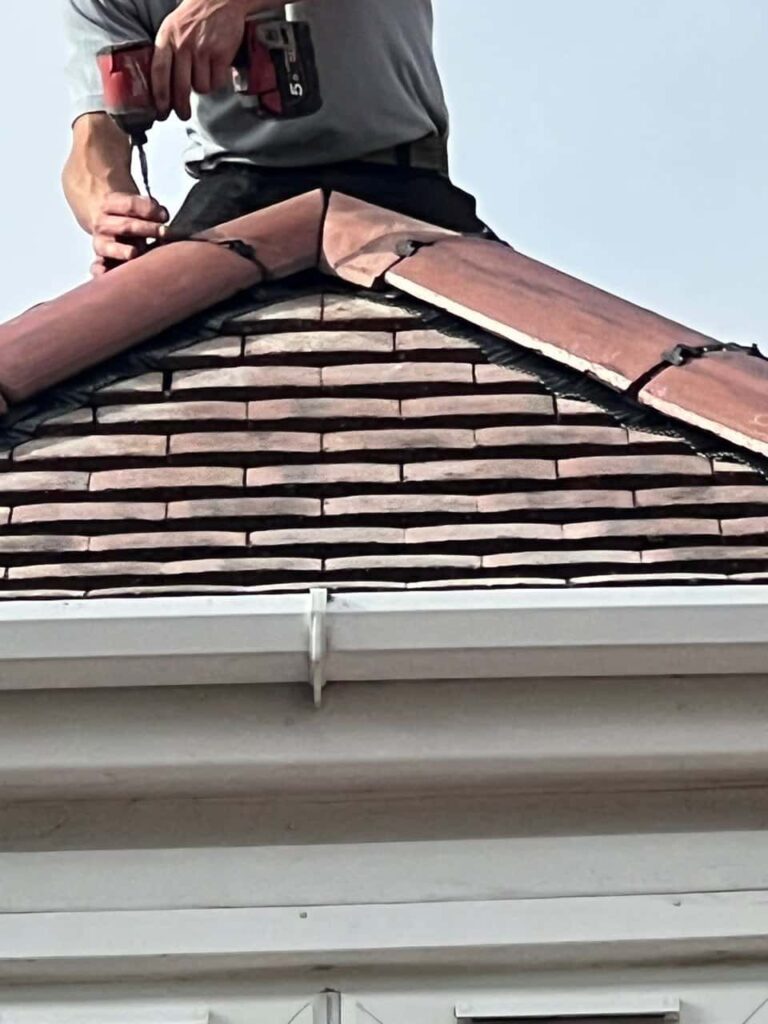
A roof is one of the most important parts of any property. It protects the structure from the weather, supports effective drainage and contributes significantly to the building’s overall appearance. When an ageing roof develops widespread defects, repeated localised repairs may no longer provide dependable performance.
Installing a new roof offers an opportunity to address the complete roofing system rather than continuing to treat individual problems. The work can improve weather resistance, resolve hidden weaknesses and create a clean, consistent finish that complements the property.
How a New Roof Can Improve Your Property
The value of a new roof extends beyond replacing old tiles or slates. A carefully planned installation considers the supporting structure, underlay, battens, ventilation, flashing and drainage details as one connected system.
Improved Protection Against the Weather
The primary purpose of a roof is to prevent rain and wind from entering the property. As materials age, cracked coverings, deteriorated underlay and weakened fixings can make this increasingly difficult.
A new roof replaces worn components and restores the layered protection needed to manage changing weather. Correctly installed tiles or slates shed rainwater, while the underlay provides secondary protection beneath the outer covering.
Secure fixings and carefully finished edges also help the roof withstand wind pressure more effectively.
The Opportunity to Address Hidden Defects
Some roofing problems remain concealed until the existing covering is removed. Moisture-damaged battens, deteriorated underlay and localised timber defects may not be visible during an external inspection.
A roof replacement allows these components to be examined before the new covering is installed. Any unsuitable or weakened materials can then be dealt with as part of the work.
This helps prevent an existing defect from being covered over and carried into the new roofing system.
Greater Reliability Than Repeated Patching
Local repairs remain appropriate when damage is confined to a manageable area and the rest of the roof is in serviceable condition. However, patching becomes less effective when different defects continue to appear across an ageing roof.
Signs that the wider system may be deteriorating include:
- Tiles or slates failing in several areas
- Repeated leaks from different locations
- Brittle or torn underlay
- Widespread mortar deterioration
- Several unsuccessful previous repairs
- Persistent moisture within the roof space
- Noticeable distortion along the roofline
A new roof provides a consistent system with components installed to work together, reducing reliance on numerous repairs of different ages.
Better Water Management
A dependable roof must direct rainwater away from the property efficiently. The roof covering, valleys, flashing, eaves and guttering interfaces all contribute to this process.
During replacement, these details can be assessed and formed as part of the complete installation. Valleys can be correctly aligned, flashing can be renewed and the eaves can be finished so that water reaches the drainage system as intended.
Good detailing is particularly important around chimneys, adjoining walls and roof penetrations, where water commonly finds a route inside.
Improved Roof Ventilation
Ventilation helps control moisture within the roof space. Without adequate airflow, warm moisture-laden air from the property can condense on colder roofing components.
A new installation provides an opportunity to review how the roof space is ventilated. The correct approach depends on the roof design, insulation arrangement and construction of the property.
Ventilation should be planned as part of the roofing system rather than added without considering how air and moisture move through the building.
A Cleaner and More Consistent Appearance
A roof occupies a large and highly visible part of a property’s exterior. An ageing covering may contain faded materials, mismatched repairs, uneven lines and deteriorated mortar.
New tiles or slates create a more uniform finish. Straight courses, neat ridges and carefully formed junctions can improve the appearance of the entire building.
The selected materials should complement the property’s character rather than appearing disconnected from the walls, windows and surrounding exterior features.
Enhanced Kerb Appeal
A visibly worn roof can make an otherwise well-maintained property appear neglected. Replacing it can sharpen the roofline and give the building a more cared-for appearance.
Kerb appeal is not achieved by the covering alone. Details such as verges, ridges, valleys, flashing and connections with guttering all affect the finished result.
Professional installation ensures that these areas are treated with the same care as the main roof slopes.
A Chance to Select Suitable Materials
Roof coverings vary in weight, appearance and suitability for different roof pitches. Choosing a new roof is therefore not simply a matter of selecting a preferred colour.
The roofing contractor should consider:
- The pitch and shape of the roof
- The strength of the supporting structure
- The required tile or slate overlap
- The property’s existing appearance
- Exposure to wind and rain
- Chimneys, valleys and roof penetrations
- Ventilation and drainage requirements
- How new materials will connect with adjoining features
A material that suits the roof’s construction is more important than appearance alone.
Stronger Overall Property Protection
A roof protects more than the rooms immediately beneath it. Water entering through the covering can reach insulation, ceilings, walls and timber components.
By restoring the complete weather-resistant envelope, a new roof helps protect these connected parts of the building. This is particularly valuable where previous leaks have occurred in several places or where the roof can no longer be maintained reliably through local repairs.
Why Professional Installation Matters
Even high-quality roofing materials will not perform correctly if they are installed over an unsuitable structure or detailed poorly. The reliability of a new roof depends on careful preparation and consistent workmanship.
Professional installation should include:
- Assessment of the exposed roof structure
- Replacement of defective battens or underlay
- Correct setting out of the roof covering
- Secure mechanical fixing
- Properly formed valleys and junctions
- Suitable flashing around vulnerable details
- Effective ventilation
- Neat connections with drainage components
Each stage contributes to the roof’s ability to protect the property as a complete system.
Conclusion
A new roof can improve weather resistance, resolve concealed defects and provide a cleaner, more consistent appearance. It may be the most practical solution when an ageing roof has developed widespread deterioration or requires repeated repairs in different areas.
TRP Roofing Kingswood installs new roofs in Kingswood, East Riding of Yorkshire, with careful attention to structure, ventilation, drainage and finishing details. If your existing roof is becoming unreliable, contact the team to arrange a professional assessment.
Call us on: 01482 420 395
Click here to find out more about TRP Roofing Kingswood
Click here to complete our contact form and see how we can help with your roofing needs.