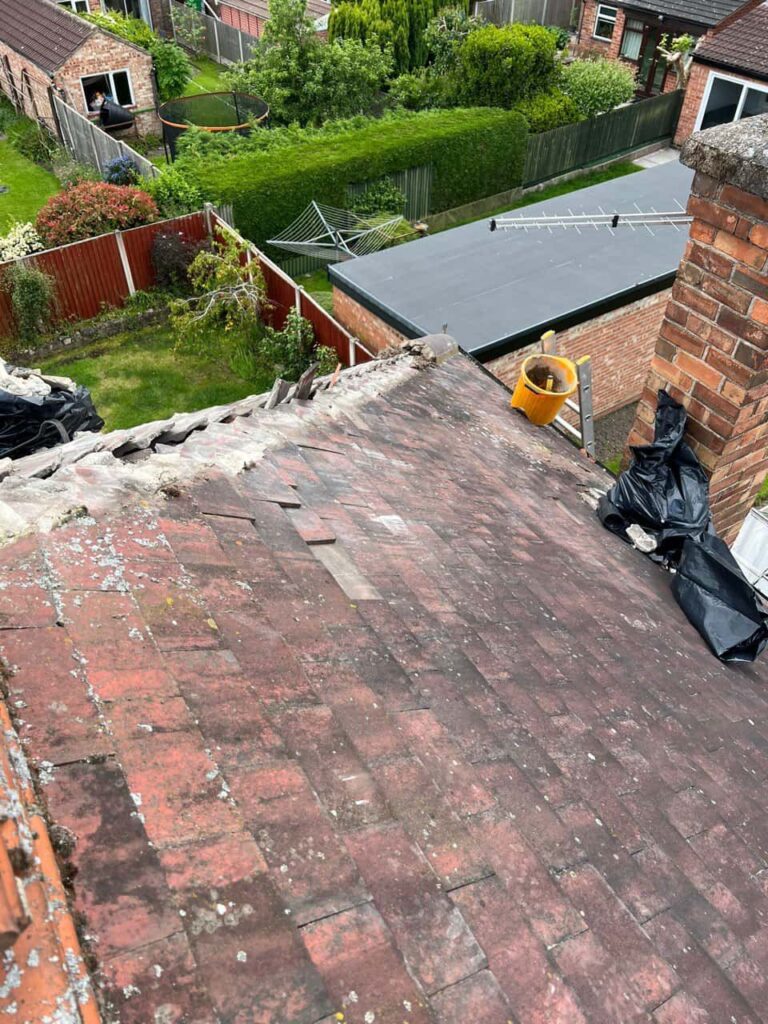
When a roof develops a different problem every year, individual repairs can begin to feel like part of an ongoing cycle. One season may reveal slipped tiles, while the next brings damaged flashing, failing mortar or water ingress elsewhere. Although each defect may be repairable in isolation, repeated faults can indicate that the roof is deteriorating as a complete system.
Replacing an ageing or extensively worn roof can prevent many of these recurring problems by renewing the materials responsible for keeping the property weather-resistant. However, replacement should be based on the roof’s overall condition rather than the number of years it has been in place.
Why Do New Roof Defects Keep Appearing?
Roofing materials are designed to work together. Tiles or slates form the outer covering, while battens, underlay, flashing, mortar and drainage details provide additional protection. As these components age, they may begin to weaken at a similar rate.
Repairing one damaged section does not renew neighbouring materials. A cracked tile may be replaced successfully, but another weathered tile could fail several months later. The same can happen with ageing underlay, corroded fixings and deteriorating mortar.
Repeated defects may therefore be separate symptoms of the same wider issue: a roof whose materials are becoming less dependable.
Signs That the Roof May Be Deteriorating More Widely
An isolated problem does not usually justify replacing an otherwise sound roof. Concern becomes more reasonable when inspections identify defects across several areas or roof slopes.
Signs of broader deterioration can include:
- Tiles or slates repeatedly slipping or cracking
- Leaks developing in different rooms
- Widespread damage to the roof underlay
- Ridge or hip tiles becoming loose in several places
- Mortar breaking away from multiple roof details
- Flashing deteriorating around chimneys or adjoining walls
- Roof timbers showing evidence of recurring moisture
- Repairs becoming necessary more frequently
- Previous repair areas remaining sound while adjacent sections fail
These findings suggest that the roof may no longer provide consistent protection, even if some individual areas still appear serviceable.
How Roof Replacement Can Reduce Recurring Problems
A complete roof replacement allows the main covering and supporting weatherproofing elements to be renewed together. The existing tiles or slates can be removed so that the condition of the battens, underlay and accessible roof structure can be properly assessed.
Any unsuitable components can then be corrected before the new covering is installed. This creates a continuous and coordinated roofing system rather than a collection of old sections and localised repairs.
Replacement can address vulnerabilities that may otherwise remain hidden beneath the surface. It also allows junctions, valleys, ridges and flashing details to be integrated correctly with the new roof covering. When installed professionally, the result should provide more dependable protection and reduce the likelihood of age-related defects appearing in different places each year.
Does Every Roof With Recurring Defects Need Replacing?
Not necessarily. Several repairable problems can sometimes occur close together without indicating complete roof failure. For example, a limited area exposed to prevailing weather may deteriorate faster than the rest of the roof.
A targeted repair may remain appropriate when:
- Damage is confined to one clearly defined section
- Most tiles or slates are secure and in good condition
- The underlay and battens remain serviceable
- The roof structure is dry and sound
- The cause of the recurring problem can be identified
- The repaired area can be connected reliably to surrounding materials
The decision should depend on whether the remaining roof can continue performing as intended. Replacing a roof too soon is unnecessary, but repeatedly repairing materials that are failing across several areas may not provide a dependable long-term outcome.
Why a Detailed Roof Inspection Matters
An effective assessment looks beyond the most recent visible defect. It considers the condition of the entire roof covering, along with its fixings, underlay, battens, flashing, valleys, ridges and drainage details.
The inspection should establish whether each new problem is genuinely isolated or connected to widespread deterioration. It may also uncover hidden issues, such as brittle underlay or weakened battens, that cannot be identified from ground level.
For homeowners in Kingswood, East Riding of Yorkshire, this assessment provides a practical basis for deciding between further repairs and roof replacement. The aim is to recommend work that reflects the roof’s actual condition rather than making assumptions based solely on its age or appearance.
Planning for Reliable Long-Term Protection
If replacement is considered appropriate, careful planning is essential. The new roof covering must be suitable for the property, installed with correct detailing and supported by sound underlying components.
Attention should also be given to ventilation, water run-off and vulnerable junctions. These details influence how well the roof manages moisture and changing weather conditions over time. A properly coordinated installation helps prevent avoidable weaknesses from being built into the new roof.
At TRP Roofing Kingswood, we assess recurring roofing problems carefully and explain whether focused repairs remain suitable or whether replacement offers a more reliable solution.
Conclusion
Replacing a roof can prevent new defects from appearing every year when repeated problems are being caused by widespread ageing or deterioration. By renewing the covering and its supporting weatherproofing components together, replacement can remove multiple vulnerable areas and restore consistent protection.
However, recurring defects do not automatically mean that a new roof is required. A professional inspection is the best way to determine whether the problems remain localised or indicate broader failure.
If your property in Kingswood, East Riding of Yorkshire, develops a new roofing issue year after year, contact TRP Roofing Kingswood to arrange an assessment and receive clear advice on the most appropriate next step.
Call us on: 01482 420 395
Click here to find out more about TRP Roofing Kingswood
Click here to complete our contact form and see how we can help with your roofing needs.